Hey everyone, Jake here, and if you’ve ever worked in manufacturing, printing, textile, or even food processing, you’ve probably stumbled on chrome plated rollers without even realizing it. I’ve been supplying these bad boys for over a decade now, and let me tell you—most folks don’t grasp just how much these small, seemingly simple components shift a machine’s performance. Today, I’m breaking down why they matter, straight from someone who’s spent years shipping them to factories around the country, no fancy jargon or corporate fluff here. Chrome Plated Rollers

First off, let’s talk basics: a chrome plated roller is just a steel core (usually carbon steel, since it’s cheap, strong, and holds shape) coated with a thin layer of hard chromium, right? Most of the time that coating’s like 0.05mm to 0.2mm thick—super thin, but that’s where the magic lives. Wait, I know what you’re thinking: “Chromium’s just shiny metal, what’s the big deal?” Nope, it’s not the same as the chrome on your car’s bumper that scratches if you look at it wrong. Industrial chrome plating is a whole different process—we use electrolytic plating, so the chromium bonds way tighter to the steel core than decorative chrome ever could. That’s the first key point no one tells you.
Let’s start with wear and tear, because that’s the biggest headache any machine operator deals with. Think about a roller doing the same thing all day, every day—say, a printing press’ anilox roller transferring ink, or a textile machine’s roller pulling fabric. If you used a plain steel roller, after a few weeks, that surface would have tiny scratches, pitting, and maybe even flat spots from rubbing against other parts. That’s a disaster for consistency, because every scratch means uneven ink flow, stretched fabric, or misaligned packaging. I had a client last year who was going through 3 steel rollers a month on their corrugated line—they were replacing them every 10 days because the rough surface would catch on corrugated board and tear edges. Switched to our chrome plated rollers, and now they go 6 months without a replacement. That’s not a typo—6 months vs. 10 days. Why? Chrome’s like 8 on the Mohs hardness scale, same as quartz, way harder than steel (which is like 4.5 to 5). It’s way more resistant to abrasive wear, so those tiny scratches don’t show up for ages. Less wear means fewer breakdowns, less downtime, and less money spent on parts—simple as that.
Next up, corrosion resistance. Steel rusts, duh. If you work in food and beverage, or chemical processing, your rollers are getting exposed to moisture, cleaning chemicals, maybe even acidic or oily materials. Plain steel will start rusting within a couple of weeks if you’re not storing parts perfectly, and rust flakes off, get into your product, or scratch whatever material you’re processing. One brewery client used to have to replace their label applicator rollers every 2 months because beer and cleaning agents would make the steel rust. They switched to chrome plated, and now their rollers are still going strong after a year. The chromium coating acts as a barrier—water and chemicals can’t get through it to the steel core underneath. Even if you nick the coating a little, wait—no, actually, industrial chrome plating is so dense that it almost doesn’t let anything through. Rust’s not a problem here, which is huge for industries that can’t have contaminants in their end product.
Wait, another thing: friction control, and not just less of it. Friction is a double-edged sword. Too little, and the roller slips—your fabric doesn’t pull through evenly, ink smudges, packages misfeed. Too much, and you’re wasting energy, overheating the machine, or wearing out bearings faster. Chrome plated surfaces have a very low coefficient of friction—way lower than steel. That means less drag between the roller and whatever it’s touching. That saves energy: I’ve had clients tell me their electricity bills dropped 10-15% after switching to chrome rollers because their machines don’t have to work as hard to turn them. But it’s not just less friction—it’s consistent friction. A steel roller’s rough surface means friction changes as it wears, but chrome stays smooth for way longer, so your machine operates at the same speed every time. That consistency is what makes production lines run smoothly, no more manual adjustments every hour because the roller’s changed.
Oh, and let’s not forget release properties. If you work with adhesives, polymers, rubber, or even waxes, you know how bad stuff sticks to plain steel. That adhesive builds up on the roller surface, gets uneven, and every roll leaves a mess on your product. Chrome’s non-stick? Not like Teflon, but close enough for industrial use. The smooth, dense surface means materials don’t bond to it as easily. That means less time scraping rollers at the end of a shift, less product waste because of sticky buildup, and no more having to shut down the line to clean parts. A client in the plastic bag industry told me they used to lose 2 hours a day to cleaning their forming rollers—now they only need 20 minutes, and their bag defect rate dropped by 20% because there’s no sticky buildup causing uneven edges. That’s the kind of ROI you can’t ignore.
Wait, let’s also talk about heat resistance, especially for hot processing. If you’re in extrusion, coating, or laminating, rollers get hot—sometimes up to 300°F or more. Steel can handle that, but it expands and contracts a lot more than chrome, right? So when the roller heats up, it swells, and when it cools, it shrinks back. That’s a problem for precision parts, because even tiny expansion can throw off alignment. Chrome has a much lower thermal expansion coefficient than steel, so the roller stays more stable when it heats up. That means your lines run with way less misalignment, fewer defective products, and the machine bearings don’t get beat up from constant expansion and contraction stress. One client in the lamination business was getting 1000 defective sheets a week because their steel rollers would expand during heating, throwing the laminate alignment. Switched to chrome, and now defective sheets are down to less than 50 a week. Again, that’s real numbers from real clients, not theory.
Now, I know what some people are thinking: “Why not just use stainless steel rollers?” Stainless is another option, but let’s be real—chrome plated rollers are way cheaper. Stainless steel costs 2-3 times more than the steel core we use for chrome plating, and the plating process adds just a small fraction to the cost. Also, stainless can have a rougher surface than well-done chrome plating, which is bad for consistency. We’ve had clients test both: stainless lasted a bit longer, but the extra cost meant they saved more overall with chrome, plus the smoother surface gave better product quality. It’s not a one-size-fits-all, but 9 times out of 10, chrome plated rollers hit that perfect spot of performance and affordability.
Wait, but it’s not all rainbows—there are things you have to get right, too. If the plating is done poorly, like if it’s too thin, or there are tiny gaps or bubbles in the coating, it can wear out fast, and even cause the steel underneath to rust. That’s why it matters to get suppliers who know what they’re doing, not just someone who can throw some chrome on a steel rod. That’s where my team comes in—we do a 3-step prep before plating: sandblast the steel core to make sure the chrome bonds tight, then clean it super well, then apply the chromium with precise electrolysis parameters. We test every single roller after plating to check thickness and adhesion, so you don’t get a dud that lasts 2 weeks. I’ve seen so many people go cheap on rollers and end up spending more in the long run replacing them constantly.
Let me wrap this up with a quick recap for anyone skimming: chrome plated rollers boost machinery performance by cutting wear (less downtime and replacements), stopping rust and contaminants, controlling friction (saving energy and keeping speed consistent), making materials release easier (less cleaning and waste), and staying stable through heat (fewer defects). It’s not a fancy new tech, but it’s one of those unsung parts that makes manufacturing lines run right.
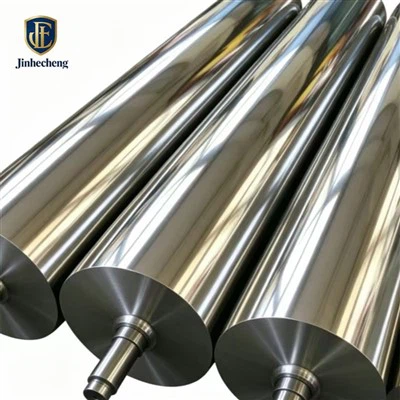
If you’re reading this and your machines are going through rollers too fast, or you’re dealing with inconsistent product quality from roller issues, hit us up. We can send you a sample of our chrome plated rollers, no strings attached, so you can test them yourself on your line and see the difference. No more guessing—just real, proven performance for your business.
Mirror Chrome Roller References:
- American Society for Metals. (2006). Coatings for Industrial Components: Chrome Plating Applications. ASM International.
- Textile Institute. (2018). Efficiency Improvements in Textile Processing Machinery: Roller Technology. Textile Research Journal.
- Institute of Food Technologists. (2020). Surface Materials for Food Processing Equipment: Corrosion and Contamination Resistance. Journal of Food Protection.
- Plastics Technology Association. (2019). Extrusion Roller Performance: Thermal Stability and Friction Control. Plastic Engineering Magazine.
Qingdao Jinhecheng Machinery Co., Ltd.
Qingdao Jinhecheng Machinery Co., Ltd. is one of the most professional chrome plated rollers manufacturers and suppliers in China, featured by quality products and low price. Please rest assured to buy discount chrome plated rollers made in China here from our factory. Customized orders are welcome.
Address: Aishan Industrial Park, Yanghe Town, Jiaozhou, Qingdao City, Shandong Province
E-mail: alice@jhcroller.com
WebSite: https://www.jhcroller.com/
