When I’m out on the water—whether it’s a weekend fishing trip or a longer coastal passage—I’ve seen too many boaters brush off marine radio safety features as “just extra buttons” or “something I’ll never need.” As the owner of a marine radio supply business, I talk to folks every week who tell me they “just turn it on and use channel 16 if they have to.” But here’s the thing: those extra buttons, modes, and settings aren’t there to clutter your device. They’re designed to save lives. I’ve supported customers who’ve used digital selective calling (DSC) to summon help when their boat was disabled in a heavy fog, and I’ve heard the opposite story too—a boater who tried to send a distress call on a regular channel and waited 20 minutes for someone to pick up. That’s the gap we’re fixing, and I want to help you close it too. Let’s break down how to actually use your marine radio’s safety features, step by step, like I’d walk a new customer through in my shop. Marine Radio
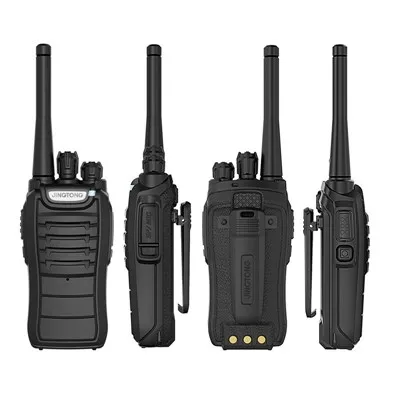
First, let’s start with the basics: what makes a marine radio different from a CB radio or a cell phone? Marine radios operate on VHF (very high frequency) bands regulated by the International Telecommunication Union (ITU) and national maritime authorities, and they have dedicated safety channels that can’t be ignored. The two non-negotiable core safety features on every modern fixed or handheld marine radio are DSC and the dual watch function. DSC is the big one I see underused the most. A lot of new boaters don’t know that if your radio is connected to a GPS (which, let’s be real, every boat that’s out there should have one), DSC automatically sends your exact position to the Coast Guard or other nearby vessels when you trigger a distress alert. I’ve had a customer who was fishing alone near a rocky coastline, hit the DSC distress button when his engine died in a 3-foot swell, and had the Coast Guard on scene in 12 minutes—they didn’t have to ask him where he was, because the radio sent it instantly. If you’re using a handheld VHF (portable) radio, make sure it’s registered with your national maritime agency (like the FCC in the U.S., Ofcom in the UK, or Transport Canada) before you use DSC. Unregistered DSC calls can be ignored, which is a critical mistake.
Next, dual watch. That’s the feature that lets your radio monitor two channels at once, usually Channel 16 (the international distress and calling channel) plus whichever channel you use for your local hails, like Channel 72 for recreational boaters or Channel 68 for commercial work. A lot of boaters just use “mono” mode, which only monitors one channel. But here’s how that plays out: you’re chatting with your buddy on Channel 71, and someone sends a Mayday on Channel 16, but you don’t hear it because your radio was locked to 71. Dual watch fixes that. On most radios, you activate it by pressing the “W” or “D/W” button (it’s usually labeled right next to the power button for fixed units, or on the side of handhelds). Once it’s active, the radio will pause whatever you’re listening to on your working channel for 2 seconds every 6 seconds to check Channel 16. I recommend setting your working channel to the one you use most for local traffic, and never turning dual watch off when you’re out of sight of land—even on calm days, things can go wrong fast.
Then there’s even more granular safety features that go beyond just calling for help. The low battery alert is one that’s super easy to miss, especially on handheld radios. When your battery gets below a certain voltage (usually around 3.5V for a lithium-ion battery, or 6V for a NiMH pack), the radio will beep or flash a low-battery icon. But a lot of people ignore that beep because it’s quiet, or they think “I’ll just plug it into the charger when I get back to the dock.” If you’re offshore, a dead handheld radio is a dead weight—you can’t call for help, you can’t check weather forecasts, and you can’t communicate with other vessels. My rule for customers is: charge your radio the night before every trip, and if that low-battery alert goes off mid-voyage, switch your radio to Channel 16 only, turn off any extra features like backlighting (which drains battery fast), and only use it for necessary calls until you can get back to shore.
Another underrated safety feature is weather alert mode. Most modern marine radios (both fixed and handheld) have a weather channel scan feature that automatically picks up NOAA (U.S.) or Met Office (UK) weather broadcasts. When a severe weather alert—like a thunderstorm warning, gale warning, or hurricane advisory—goes out, the radio will automatically cut into whatever channel you’re listening to and play the alert loudly, even if your volume is turned down. A customer of mine last year used this feature when he was out on Lake Erie, and the radio alerted him to a sudden line of 50mph winds 10 minutes before his GPS showed a storm cell approaching. He turned around and got to the marina 20 minutes before the storm hit, avoiding a close call with his 22-foot boat. To use this, you just need to make sure your radio’s weather channels are set to your local area—each country has a grid of weather channels, and your radio might have a “scan weather” button that cycles through them automatically. Don’t just leave this feature off; even if you checked the forecast before you left, conditions on the water change fast, and that alert is a heads-up you can’t get from a phone (which loses signal 5 miles from shore).
Now, I want to talk about a common mistake I see all the time when people use safety features: misusing Channel 16. Channel 16 is for distress calls and initial hails only—you shouldn’t have a casual conversation on it. When I teach customers how to use DSC, I also tell them that before you send a distress alert, you should try to hail a nearby vessel on Channel 16 first to see if anyone can help. If no one answers after 30 seconds, then hit the DSC distress button. That’s because DSC sends a direct alert to the Coast Guard, which triggers a full response—sometimes even launching a rescue helicopter, which is a waste if a nearby boater could pull you to safety. I once had a customer who hit the DSC distress button by accident when he bumped the radio while tying up to a dock. The Coast Guard launched a rescue boat, and they spent 2 hours verifying his location before he could cancel the alert. That’s a costly mistake—so make sure you know how to cancel a DSC distress alert, which is usually a long press of the same button, or a menu option on fixed radios. If you ever accidentally trigger it, don’t panic—just cancel it as fast as possible.
Let’s also cover handheld vs. fixed marine radios, because the safety features work a little differently for each. Fixed radios (the ones mounted on your boat’s helm) are connected to the boat’s power, so their battery life isn’t a problem, but they have a bigger antenna, which means a longer range for calls and weather alerts. Handheld radios are portable, so you can take them to the bow or a small tender, but their battery is finite. For handhelds, make sure you buy a battery pack that’s rated for marine use—cheap third-party batteries might not handle the saltwater or temperature changes, which can make the low-battery alert unreliable. I always recommend that customers who use handhelds keep a spare, fully charged battery and a portable charger that can run off a car or boat battery. For fixed radios, test the DSC function once a month—pressing the test button (it’s usually labeled “Test” on DSC units) to make sure it’s transmitting your GPS position correctly. A lot of people don’t test it until they need it, and it turns out the GPS cable was loose, so the distress call had no location. That’s a fix you can do in 2 minutes, but it could save your life.
Another feature that’s gaining traction lately is AIS (Automatic Identification System) integration with your marine radio. AIS lets other vessels see your boat’s position, size, and course, and when it’s paired with a DSC-enabled radio, your DSC distress call will also send that AIS data, so the Coast Guard or other vessels know exactly what they’re looking for when they reach you. A lot of mid-tier and higher-end marine radios have built-in AIS receivers, and even if yours doesn’t, you can get a small AIS transponder that connects to your radio. I’ve had customers in busy shipping lanes tell me that when they sent a DSC distress call, the nearby cargo ships got the alert immediately and diverted to help, because the AIS data let them know exactly where to find the disabled sailboat.
Now, let’s talk about the small, easy-to-overlook safety habits that go hand-in-hand with using these features. Even if your radio has all the bells and whistles, it’s useless if it’s not maintained. Saltwater is the enemy—after every trip, wipe down your radio with a soft cloth and fresh water, especially the antenna port and the buttons, which can get clogged with salt. If you have a handheld radio, don’t leave it in the boat when you’re not using it, because salt air corroded the battery contacts. I had a customer whose handheld was left in the boat for a week, and when he needed it, the contacts were so corroded that the radio wouldn’t turn on. It’s a $5 fix for contact cleaner, but it could have been a disaster.
Also, know the terminology. “Mayday” is for immediate, life-threatening distress—if your boat is sinking, someone is injured, or you’re taking on water, that’s when you use it. “Pan-pan” is for non-urgent, but still serious situations, like a broken engine or a lost vessel, where you need help but not an immediate rescue. “Securité” is for safety information, like a weather advisory that affects your area. A lot of new boaters mix these up, and using “Mayday” for a broken engine when no one is in danger can clutter the Coast Guard’s channels for actual emergencies. When you send a DSC distress call, it automatically sends the “Mayday” alert, which is correct for life-threatening situations, but if you’re using voice, make sure you use the right term.
I get it—there’s a lot to remember, and it’s easy to feel overwhelmed. That’s why so many of my customers come to me for one-on-one walkthroughs of their radios, whether they’re buying a new unit or just need a refresher. The key is that these safety features aren’t there to confuse you—they’re built to be used when you need them most, and a little practice goes a long way. I’ve seen firsthand how a properly used DSC call can turn a scary situation into a successful rescue, and how a weather alert can keep you from being caught in a storm.

If you’re looking to upgrade your marine radio to one with all the latest safety features, or if you have questions about how to use the features on the radio you already own, our team can help. We don’t just sell radios—we stand behind every unit we provide, and we’re here to walk you through setup, testing, and regular use so you feel confident on the water. Whether you’re a weekend boater, a commercial fisherman, or someone who just takes their small boat out for a morning cruise, we can help you find the right marine radio and make sure you know how to use its safety features to keep yourself and your crew safe. To get started with a conversation about your needs, reach out to our team to schedule a consultation.
Analog Ham Radio References
National Oceanic and Atmospheric Administration (NOAA) Weather Radio Safety Guide
Federal Communications Commission (FCC) Marine Radio Regulations
International Maritime Organization (IMO) DSC Distress Call Protocols
National Marine Electronics Association (NMEA) Marine Radio Safety Standards
Jingtong (Quanzhou) Electronics Co., Ltd.
We are one of the most professional marine radio manufacturers and suppliers in China, specialized in providing high quality customized service. We warmly welcome you to buy durable marine radio made in China here from our factory. For price consultation, contact us.
Address: No.288, Si Huang Industry Zone, Xia Mei Town, Nan An, Quanzhou, Fujian province, China 362302
E-mail: jtdjj@jtdjj.com
WebSite: https://www.jteradio.com/
