If you’ve ever held a blister pack of cold meds, a vial of vaccine, or even a bottle of generic antibiotic and wondered how those exact, consistent doses came to be—you’re not alone. As an industrial mixing equipment supplier who’s spent the last 12 years troubleshooting, upgrading, and custom-building mixers for pharma manufacturing lines, I get asked that all the time. It’s not just “stirring stuff together”—in pharmaceuticals, mixing is the make-or-break step that turns raw chemical powders, APIs (active pharmaceutical ingredients), sterile liquids, or even delicate biologic components into a safe, effective product that passes FDA, ICH, and cGMP checks. I’ve seen cheap off-the-shelf mixers tank entire production runs because they cut corners on precision, or custom units save a client six months of rework when handling temperature-sensitive biologic buffers. Today I’m breaking down exactly what industrial mixing equipment we use for pharma, why it’s non-negotiable, and how we tailor these tools to fit every unique drug’s needs. Industrial Mixing Equipment
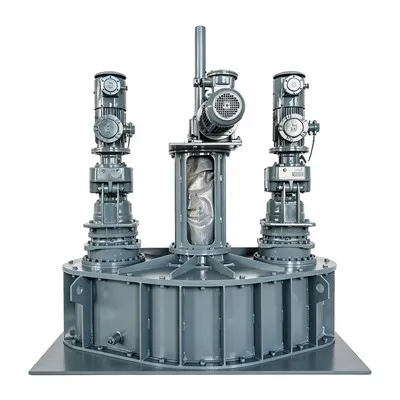
First, let’s ground this in pharma’s specific rules, because this isn’t like mixing paint or food. The FDA’s current Good Manufacturing Practices (cGMP) require that every batch of a drug has identical API concentration, no cross-contamination, and no leftover product from previous runs. That means mixing isn’t just blending—it’s high-precision, validated mixing. The biggest categories of pharma mixes fall into three buckets: dry powder blending, liquid-liquid blending, and wet granulation, each needing a totally different type of mixer. Let’s start with the one we get the most inquiries about: industrial powder mixers. Most people picture a kitchen stand mixer for powders, but pharma powder mixing is about 100x more precise. APIs are often 10% or less of the total powder blend—you’ve got a high-potency API that needs to be evenly spread across millions of pounds of excipients (fillers like lactose, binders, lubricants) so every pill has the exact same amount of drug. A poorly mixed batch will have some pills with zero API and some with a dangerous overage, leading to recalls or patient harm.
Our go-to for most general pharma powder blending is the double cone tumble mixer. These are simple in design but brilliant for consistency: a hollow metal cone that rotates 360 degrees, tumbling the powder gently as it moves up the sides and falls back down the center. No sharp blades, no shear forces that can damage fragile API crystals, and they’re easy to clean—a huge plus for cGMP compliance. Last year we worked with a generic drug manufacturer in Ohio making metoprolol tablets; they’d been using a cheaper ribbon blender that left 8% API variation at the edges of batches. We swapped in a 500-liter double cone mixer, added interchangeable FDA-grade liners to prevent cross-contamination between their 12 weekly drug lines, and did three validation runs to confirm API variation was below 0.5%—well within FDA limits. The key with double cones is speed: rotate too fast, and powder clumps; too slow, and mixing takes 4 hours instead of 1.5. We program each unit’s rotation speed based on the powder’s density, particle size, and API concentration, which is why they work so much better than generic units pulled from catalogs.
For high-potency or highly cohesive powders (think oncology drugs, where even a microgram of leftover API is a safety hazard), we use a different type: the bin blender, also called a IBC (intermediate bulk container) blender. This one’s genius because it uses the powder’s actual transport bin as the mixing chamber. The bin locks into a motorized carriage that rocks, tumbles, and rotates the entire container of powder—so you never have to transfer powder between mixers, which eliminates cross-contamination risk and cuts production steps. We designed a custom bin blender for a biotech client making CAR-T therapy raw materials, where cross-contamination would be catastrophic. Their raw material bins are sterile, so we modified the blender’s lock to work with their existing single-use liners, and programmed the rotation sequence to only run when the lid is fully sealed, preventing any exposure to operators. The client used to have to manually clean their old tumble mixer, which took 8 hours per batch; with our bin blender, cleaning takes 20 minutes and is validated via swab testing. That’s not just efficiency—that’s patient safety.
Next up: liquid-liquid mixing, which is what you need for injectable drugs, syrups, eye drops, or intravenous (IV) solutions. This is trickier than powder mixing because you’re dealing with fluids that can foam, degrade if exposed to too much heat, or separate into layers if mixed incorrectly. I learned this the hard way early in my career: a client making insulin syrups brought their mixer to us because their batches were developing a cloudy precipitate after 30 days on shelves. Their old mixer was a standard impeller unit that spun too fast, creating tiny air bubbles that reacted with the insulin’s protein structure, breaking it down. We swapped in a high-shear rotor-stator mixer with a custom seal that prevents air from entering the mixing chamber. Rotor-stator mixers work by pulling liquid through a fast-spinning rotor that forces it through a tiny stationary stator, creating shear forces that blend even immiscible liquids (like oil and water for some creams) without damaging delicate molecules. For that insulin client, we adjusted the rotor speed to 1,200 RPM (not the 2,500 RPM they’d been using) and added a temperature jacket that kept the mix at 2–8 degrees Celsius, the exact storage temp required for insulin. The precipitate issue went away, and their shelf life extended by 6 months.
For larger-scale liquid mixing, like 10,000-liter batches of IV saline or antibiotic solutions, we use stainless steel jacketed mixing tanks with top-mounted agitators. The agitators here aren’t just spinning blades—they’re engineered for the viscosity of the liquid. For thin solutions like saline, we use marine propeller agitators that create gentle circulation without splashing or foaming. For thicker liquids, like hydrocortisone creams that have a paste-like consistency, we use anchor agitators that scrape the sides of the tank to prevent material from sticking and burning onto the walls (which would ruin the batch and create cross-contamination risk for future runs). All these tanks are built with 316L stainless steel, the grade required for pharma because it’s easy to sterilize, doesn’t corrode, and won’t leach metal into the drug. We also add CIP (clean-in-place) systems: spray balls mounted inside the tank that shoot hot, sanitizing solution along every surface, so you don’t have to take the tank apart to clean it. That cuts downtime by 70% compared to manual cleaning, and gives us documented cleaning validation reports that the FDA accepts.
Another critical pharma mixing step is wet granulation, used to turn fine powder blends into uniform granules that compress into stable tablets. Think of wet granulation as “gluing” powder particles together into consistent, pill-sized pieces. This process usually takes place in a high-shear granulator, a unit that combines the powder, a liquid binder (like water or polyvinylpyrrolidone), and blends them at high shear to form granules. The key here is controlling the shear rate: too much, and you get hard, dense granules that don’t dissolve in the body; too little, and you get fine powder that won’t compress into pills. We work with a Parkinson’s drug manufacturer that had a problem with their granules being inconsistent, leading to high tablet breakage during compression. We upgraded their old granulator’s impeller to a dual-speed design: a slow speed for mixing the powder and binder to avoid over-shearing, and a fast speed for the final granulation step. We also added a sensor that monitors the granule size in real time, so operators can stop the mix as soon as the granules hit the target size (usually 500–1,000 microns). That client’s tablet breakage dropped from 12% to less than 1%, saving them $200,000 a month in wasted material.
Now, what makes pharma mixing different from any other industry? It’s validation and traceability. Every step of mixing has to be documented, so if a batch fails, you can pinpoint exactly what went wrong. That’s why our mixers come with built-in data loggers that track speed, temperature, mixing time, and pressure for every run. These logs are time-stamped, encrypted, and exportable in a format that’s compatible with FDA’s e-Record regulations. We also build our mixers to be easy to validate: all internal surfaces are smooth (no crevices where powder can get stuck), and we provide custom SOPs (standard operating procedures) for cleaning, set-up, and operation. For example, if a client is switching from a blood pressure drug to an antibiotic, we can swap out the mixing bin (for bin blenders) and run a validated clean that ensures cross-contamination is below 1 part per million, the FDA’s limit for most drugs.
I get it—many pharma manufacturing teams think mixing is a commodity, something they can buy off a catalog for a few thousand dollars. But I’ve seen what happens when you cut corners: a $50,000 off-the-shelf mixer that costs a pharmaceutical plant $2 million in wasted API, delayed product launches, and a FDA warning letter because of inconsistent batch quality. That’s why we don’t just sell mixers—we work with clients to design a mixer that fits their specific drug, production scale, and compliance requirements. We do on-site audits of their current line, test their raw materials in our in-house lab to determine optimal mixing parameters, and provide training for their operators so they can run the mixer correctly. Last quarter, we helped a small biotech startup that was testing a rare disease drug (only 10,000 doses a year) build a custom small-scale tumble mixer that could handle 50-liter batches, was easy to sterilize with gamma radiation, and met all ICH Q7 guidelines for drug manufacturing. They launched the drug 3 months ahead of schedule, all because we didn’t sell them a generic unit—we built something tailored to their needs.

If you’re a pharmaceutical manufacturing manager, quality control lead, or operations director struggling with inconsistent batches, cross-contamination risks, or long changeover times between products, our team has the experience to help. We don’t just deliver equipment—we provide ongoing support, including annual calibrations, cleaning validation assistance, and upgrades as your production needs grow. Don’t let a bad mixer put your patients at risk or derail your product launch: reach out to our team to discuss your pharma mixing challenges today.
Sludge Scraper References
- International Council for Harmonisation of Technical Requirements for Pharmaceuticals for Human Use (ICH). Q7 Good Manufacturing Practice Guide for Active Pharmaceutical Ingredients. 2000.
- U.S. Food and Drug Administration (FDA). Current Good Manufacturing Practice (CGMP) Regulations for Finished Pharmaceuticals. 21 CFR Part 210, 2023.
- Paul, E. L., Atiemo-Obeng, V. A., & Kresta, S. M. Handbook of Industrial Mixing: Science and Practice. John Wiley & Sons, 2004.
- U.S. Food and Drug Administration (FDA). Guideline on Sterile Drug Products Produced by Aseptic Processing. 2004.
- Shah, R. B., & Gulecha, V. M. “Powder Blending in Pharmaceutical Manufacturing: A Review.” Journal of Pharmaceutical Sciences, vol. 106, no. 9, 2017, pp. 2282–2295.
Shandong Ningye Machinery Equipment Co., Ltd.
Shandong Ningye Machinery Equipment Co., Ltd. is one of the most reliable industrial mixing equipment manufacturers and suppliers in China. With abundant experience, we warmly welcome you to buy discount industrial mixing equipment made in China here from our factory. Quality products and low price are available.
Address: Workshop No.16, Dongcao Village Industrial Park, Guangda East Road, Songguantun Subdistrict, Economic and Technical Development Zone, Dezhou City, Shandong Province
E-mail: wjkningye@cn-ningye.com
WebSite: https://www.cn-ningye.com/
