In the world of precision machinery and automation, roller linear guides play a pivotal role in ensuring smooth, accurate, and reliable linear motion. As a supplier of roller linear guides, I’ve had numerous discussions with engineers, designers, and manufacturers about various aspects of these essential components. One question that frequently comes up is, "What is the preload of a roller linear guide?" In this blog post, I’ll delve into the concept of preload, its significance, and how it impacts the performance of roller linear guides. Roller Linear Guide

Understanding Preload in Roller Linear Guides
Preload refers to the intentional application of a force or stress to a mechanical component before it is subjected to an external load. In the context of roller linear guides, preload is the force applied between the rollers and the raceways of the guide. This force eliminates the clearance or play between the rolling elements and the raceways, creating a more rigid and stable system.
The preload in a roller linear guide is achieved by using different methods, such as adjusting the size of the rollers, using offset raceways, or applying a preload spring. The amount of preload is carefully selected based on the specific application requirements, including the load capacity, accuracy, stiffness, and speed of the linear motion system.
Significance of Preload
Improved Stiffness
One of the primary benefits of preloading a roller linear guide is the significant increase in stiffness. When the guide is preloaded, the rollers are pressed firmly against the raceways, reducing the deflection that occurs under load. This enhanced stiffness is crucial in applications where high precision and minimal deflection are required, such as in CNC machine tools, semiconductor manufacturing equipment, and precision measuring instruments.
For example, in a CNC milling machine, the linear guides need to maintain high stiffness to ensure accurate positioning and smooth cutting. A preloaded roller linear guide can withstand the cutting forces without excessive deflection, resulting in better surface finish and dimensional accuracy of the machined parts.
Enhanced Accuracy
Preload also plays a vital role in improving the accuracy of linear motion. By eliminating the clearance between the rollers and the raceways, preload reduces the backlash or play in the system. Backlash can cause errors in positioning, especially in applications that require frequent reversals of motion. With a preloaded roller linear guide, the motion is more precise, and the positioning accuracy is improved, leading to better overall performance of the machine.
In a coordinate measuring machine (CMM), for instance, high accuracy is essential for precise measurement of workpieces. A preloaded roller linear guide ensures that the measuring probe moves smoothly and accurately along the linear axes, providing reliable and accurate measurement results.
Increased Load Capacity
Another advantage of preloading a roller linear guide is the increase in load capacity. The preload force distributes the load more evenly among the rollers, allowing the guide to support higher loads without excessive deformation. This is particularly important in applications where heavy loads are involved, such as in industrial robots, material handling equipment, and large-scale manufacturing machinery.
Consider an industrial robot used for lifting and moving heavy objects. A preloaded roller linear guide can provide the necessary load capacity to support the weight of the robot’s arm and the payload, ensuring stable and reliable operation.
Damping and Vibration Reduction
Preload can also help to reduce vibrations and improve the damping characteristics of a roller linear guide. When the guide is preloaded, the rollers are held firmly in place, which helps to absorb and dissipate vibrations generated during operation. This is beneficial in applications where vibration can affect the performance or quality of the machine, such as in high-speed machining centers and optical inspection equipment.
In a high-speed machining center, vibrations can cause poor surface finish, tool wear, and reduced machining accuracy. A preloaded roller linear guide can minimize vibrations, resulting in improved machining quality and longer tool life.
Types of Preload
There are several types of preload commonly used in roller linear guides, each with its own advantages and applications.
Zero Preload
Zero preload, also known as clearance preload, is the condition where there is a small amount of clearance between the rollers and the raceways. This type of preload is suitable for applications where low friction and high speed are required, such as in light-duty automation systems and pick-and-place machines. Zero preload allows for smooth and effortless motion, but it may result in lower stiffness and accuracy compared to other types of preload.
Light Preload
Light preload provides a small amount of preload force between the rollers and the raceways. It offers a good balance between low friction and improved stiffness and accuracy. Light preload is commonly used in applications where moderate loads and precision are required, such as in 3D printers, laser cutting machines, and small robotics.
Medium Preload
Medium preload is a more substantial preload force that significantly increases the stiffness and accuracy of the roller linear guide. It is suitable for applications where higher loads and precision are critical, such as in CNC turning centers, grinding machines, and semiconductor wafer handling equipment.
Heavy Preload
Heavy preload provides the maximum amount of preload force, resulting in the highest stiffness and accuracy. This type of preload is typically used in applications where extremely heavy loads and high precision are required, such as in large-scale press machines, forging equipment, and aerospace manufacturing.
Selecting the Right Preload
Choosing the appropriate preload for a roller linear guide is crucial to ensure optimal performance and longevity of the linear motion system. The following factors should be considered when selecting the preload:
Load Requirements
The magnitude and direction of the load are the primary factors in determining the preload. Higher loads generally require a higher preload to ensure sufficient stiffness and load capacity. The type of load, such as static or dynamic, also needs to be taken into account.
Speed and Acceleration
The speed and acceleration of the linear motion system can affect the preload requirements. Higher speeds and accelerations may require a lower preload to reduce friction and prevent overheating, while lower speeds may allow for a higher preload for improved stiffness and accuracy.
Accuracy Requirements
The required level of accuracy in the application is another important consideration. Applications that demand high precision, such as in medical devices and nanotechnology equipment, typically require a higher preload to minimize backlash and ensure accurate positioning.
Environmental Conditions
The operating environment, including temperature, humidity, and dirt, can also influence the preload selection. Harsh environments may require a higher preload to prevent the entry of contaminants and ensure reliable operation.
Conclusion
In summary, the preload of a roller linear guide is a critical factor that affects its performance in terms of stiffness, accuracy, load capacity, and vibration damping. By understanding the concept of preload and its significance, engineers and designers can make informed decisions when selecting the appropriate preload for their specific applications.
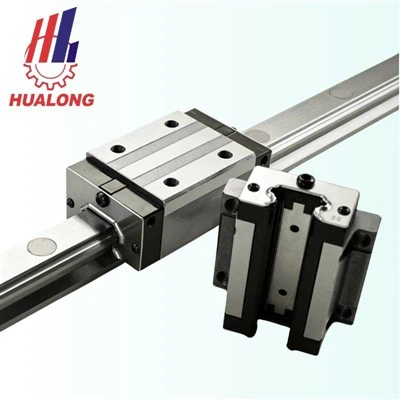
As a supplier of roller linear guides, we have the expertise and experience to help you choose the right preload and guide for your needs. Our team of specialists can work closely with you to understand your requirements, provide technical support, and offer customized solutions.
Roller Square Linear Guide If you are interested in learning more about our roller linear guides or discussing your specific application needs, please don’t hesitate to contact us. We are committed to providing high-quality products and excellent service to help you achieve your goals in precision engineering and automation.
References
- "Roller Linear Guides: Principles, Design, and Applications" – A comprehensive textbook on the fundamentals and applications of roller linear guides.
- "Precision Linear Motion Systems: Design and Manufacturing" – A technical reference that covers various aspects of linear motion systems, including preload selection.
- Industry standards and specifications related to roller linear guides, such as ISO and DIN standards.
Fujian Province Hualong Machinery Co., Ltd.
As one of the leading roller linear guide manufacturers and suppliers in China, our products have good reputation in the market. Please rest assured to wholesale bulk roller linear guide made in China here from our factory. Welcome to view our website for more information.
Address: Huangshi Industrial Park, Putian city, Fujian Province, China
E-mail: jenkin@hualongm.com
WebSite: https://www.guidelinear.com/
