If you’ve ever stood in front of a sheet of slurry pump curves feeling like you’re reading a foreign language, you’re not alone. When I first started working as a slurry pump supplier, I’d listen to customers ask for “the curve that’ll handle our ore slurry” and watch them stare at the graph like it held hidden codes. Slurry pump curves aren’t just random lines on paper—they’re a tool built to solve one of the most frustrating problems in mining, dredging, and heavy manufacturing: matching a pump to a job, instead of forcing a pump to work for a job. Today, I’m pulling back the curtain on how to actually read these curves, from the basics that even new plant managers can follow, to the small details that separate a pump that runs reliably from one that breaks down in three months. Slurry Pump
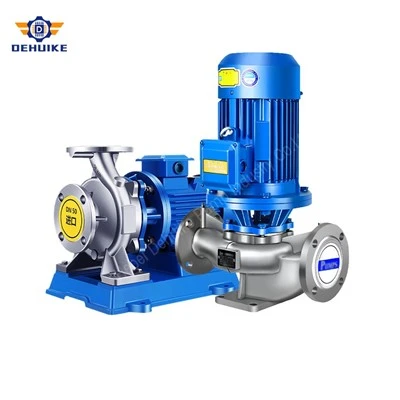
First, let’s set the stage: slurry pumps aren’t like the clear water pumps you might have in your home. They move thick, abrasive mixtures of solids and liquid—think iron ore tailings, sand, or coal slurry—so their curves have a lot more going on than just “how much water it moves.” The three core lines you’ll always see on a slurry pump curve are Head, Flow, and Efficiency. Let’s break each down, starting with the axes because that’s where most people trip up at first.
Every curve graph has two axes, and if you mix them up, you’ll get the wrong pump. The horizontal axis (that’s the flat line along the bottom) is always Flow—measured in gallons per minute (gpm) or cubic meters per hour (m³/hr). That makes sense: flow is how much slurry the pump moves, so it’s the input you can adjust for your job. The vertical axis (the line going up the side) is Head—measured in feet or meters. Head is the total energy the pump gives to the slurry, and it’s split into two parts you’ll care about: static head, which is the vertical distance the slurry has to move (like from a sump to the top of a mill), and friction head, which is the energy lost to the slurry scraping against pipes, elbows, and valves. A lot of new operators think “pump pressure” is the same as head, but pressure is just head converted into pounds per square inch—so for our purposes, stick to head numbers because curves use those consistently.
Now the first key line: the Head Curve, usually the thick, curved line that starts high on the left and dips as you move right. That’s the line that tells you how much head the pump will produce at any given flow. On the left end, where flow is super low (almost zero), that’s the shut-off head—how much energy the pump can make when it’s not moving any slurry. On the right end, where flow is as high as the pump can go, that’s the run-out head. Here’s a tip I learned early on: never pick a pump that operates at the absolute end of the head curve. If you’re at run-out, the pump is working way too hard, wearing out impellers and casings 2-3 times faster than it should. Our team sees this all the time—customers come back because their pump only lasts a month, and half the time they’re running it at flow rates that push the head curve beyond its safe, efficient range.
Next, the Flow curve seems simple, but it’s tied directly to your system. Wait—this is where people make their biggest mistake: the head curve is the pump’s performance, but your piping system has its own curve, too. If you plot both, the point where they cross is where the pump will actually operate. Let’s say you need to move 500 m³/hr of slurry 30 meters up a 100-meter pipe with two elbows. Your system’s head is going to be, say, 35 meters total (static head plus friction), so you draw that straight line (system curve) from the origin of the graph up to 500 m³/hr, 35 meters head. The cross point is your operating point. Pick a pump whose curve crosses that line, not a pump that only works at a flow that doesn’t match your pipe size or distance. I had a customer last year who bought a generic pump because it was cheap, and their system curve crossed at the very end of the pump’s head line. Within two months, the impeller was eroded so bad they had to replace it. That’s avoidable if you line up the two curves.
The third core line is Efficiency, and this is where you’ll find the sweet spot. Efficiency is the thinner line that usually dips down in the middle of the curve and goes up at the ends. Wait—no, actually, on most curves, efficiency is a line that peaks once, right around the middle of the head curve. That peak is the Best Efficiency Point, or BEP. This is the single most important number on the entire curve. Operating within 10% of the BEP flow rate is the rule we live by as a slurry pump supplier. Why? Because when you’re too far left of the BEP (low flow, high head), the slurry swirls around inside the pump instead of moving straight through, causing cavitation and Abrasive wear. Cavitation is when tiny bubbles form in the slurry, then collapse, knocking chunks out of the impeller and casing over time. When you’re too far right of the BEP (high flow, low head), the pump is straining to move more slurry than it’s built for, leading to overheating and broken seals. I’ve seen pumps last 5 years when run at 85-115% of BEP, and 6 months when run outside that range. It’s not rocket science—just stick close to that peak efficiency spot.
Now, there are a few other lines on slurry pump curves that aren’t on clear water pump curves, and they matter a lot for abrasive slurry. One is NPSH, or Net Positive Suction Head. That’s a line that sits near the bottom, usually a straight line going up with flow. NPSH is the amount of pressure needed at the pump’s suction side to keep slurry from cavitating. A lot of people skip checking NPSH, but for slurry, bad cavitation isn’t just noise—it’s a killer of parts. The NPSH Required (NPSHr) line on the curve tells you how much suction head your pump needs. You have to make sure your system provides enough NPSH Available (NPSHa)—that’s the pressure at your sump, minus the friction loss in the suction pipe. If NPSHa is less than NPSHr, you’ll get cavitation, and your impeller will wear out fast. We always tell customers to add a 10% safety margin to NPSHr, just to be safe—plant conditions change, and extra pressure never hurts.
Another unique line for slurry pumps is the Power curve, the line that usually increases as flow goes up. Power is measured in kilowatts (kW) or horsepower (HP), and this tells you how big of a motor you need. A common mistake here is undersizing the motor: if you pick a pump’s power at run-out, that’s the maximum power, but if your system runs at the BEP, the power is lower. If you put a motor rated for the run-out power, it’ll be big and waste energy. If you put a motor rated for the BEP power, it’ll burn out if the flow spikes. The right move is to pick a motor rated for the maximum power your operating point will see, with a small safety buffer—we usually add 15% to the power from the curve to cover any unplanned changes in slurry consistency, like if solids get larger or more abrasive.
Now, let’s talk about the fine print that’s easy to miss. Every curve has a “specific gravity” note. Slurry isn’t pure water, so its weight is higher. If your slurry has a specific gravity (SG) of 1.5, that means the head line on the curve (which is for water, SG=1) will have a higher power requirement. Power scales directly with specific gravity—so if your slurry is twice as heavy as water, the power needed is twice as much. That’s another mistake: customers see a curve for clear water and forget to adjust for their slurry’s SG. We’ve had to rework motor orders dozens of times because someone didn’t account for heavier slurry.
Also, note the impeller trim. Slurry pumps often have adjustable impeller trims—you can cut the impeller smaller to adjust flow, which changes the curve. If you’re working with a fixed pipe size and don’t need more flow, a smaller impeller trim will give you the same head at a lower power, saving energy. The curve will have lines for different impeller sizes, so make sure you’re using the right trim for your job. A lot of suppliers will give you a curve for a full-size impeller, but if you’re trimming it, you have to use the trimmed curve to avoid mismatching.
Let’s walk through a real example to tie this all together. Say you’re a mine operator needing a slurry pump to move 450 m³/hr of iron ore slurry with an SG of 1.4, 32 meters of total head, through 150mm pipes. First, grab the pump curve for a model we carry that fits that flow range. Find the flow axis at 450 m³/hr, draw a straight line up to 32 meters on the head axis—where they cross is your operating point. Check the efficiency at that point: if it’s 78%, that’s close to the BEP (which is around 82% at 420 m³/hr), so you’re within the 10% buffer, perfect. Next, check NPSHr at 450 m³/hr: let’s say it’s 4 meters. Your sump provides NPSHa of 5 meters, so that’s enough, but add 10% to NPSHr, so you need to make sure your suction pressure stays above 4.4 meters. Then check power: the curve says 75 kW at 450 m³/hr, so you order an 86 kW motor (15% buffer) to handle any spikes. Skip run-out: the run-out flow for this model is 550 m³/hr, which would be way outside the efficiency range, so you throttle the valve on your discharge line to keep flow at 450 m³/hr, not push the pump to move more. That’s exactly how we walk our customers through it when they’re unsure.
Now, let’s bust a couple of myths I hear all the time. First myth: “A higher head pump will always work better.” No—if you have a 100-meter head pump for a 30-meter job, it’ll run at super low flow, far left of the BEP, causing cavitation and wasting energy. You want a pump whose head curve matches your system’s head at your flow, not a pump that can do more head. Second myth: “I can just use a clear water pump for slurry.” Slurry is 10-100 times more abrasive than clear water, so a clear water pump’s impeller will wear out in weeks, not years. Slurry pump curves are built with abrasive materials in mind, so their head and power curves account for that extra load. Using a clear water pump is a false economy—you’ll spend more on repairs than you saved on the pump itself.
As a slurry pump supplier, our job isn’t just to sell you a pump—it’s to make sure it runs for years, not months. That means walking through the curve with you, not just handing it over and saying “pick this one.” We’ve seen too many customers waste time and money because they misread a line on the curve. The key takeaway, if you’re only going to remember one thing: find your operating point where your system curve crosses the pump’s curve, make sure that point is within 10% of the pump’s Best Efficiency Point, check NPSH and power with safety buffers, and match the specific gravity of your slurry. That’s how you avoid the most common mistakes.
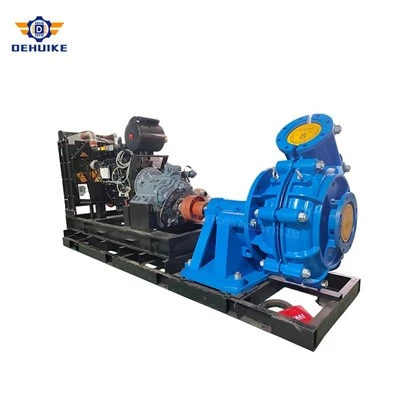
If you’re currently struggling with a pump that’s failing prematurely, or you’re planning a new installation and need to pick the right pump, don’t guess at the curve details. Reach out to our team to review your application, walk through the curve, and make sure you’re getting a pump that fits your needs, not a one-size-fits-all model that’ll cost you more down the line. We work with mining dredging, and heavy manufacturing operations to get the right pump and curve match every time, so you can focus on your operation, not pump repairs.
Submersible Slurry Pump References:
- Karassik, I. J., Messina, J. P., Cooper, P., & Heald, C. C. (2001). Pump Handbook (4th ed.). McGraw-Hill.
- American National Standards Institute (ANSI). (2014). ANSI/HI 9.8-2014, Rotodynamic Pumps for Pump Intake Design. Hydraulic Institute.
- Slurry Pump Technology Association. (2020). Guide to Slurry Pump Performance Curves and System Matching. International Slurry Pump Forum.
Hebei Dehuike Pump Industry Co., Ltd.
Hebei Dehuike Pump Industry Co., Ltd. is one of the most experienced slurry pump manufacturers and suppliers in China, featured by quality products and good price. Please rest assured to wholesale durable slurry pump made in China here and get quotation from our factory. Customized orders are welcome.
Address: Building A, Shanggu Daguan, Jingxi District, Baoding City, Room 1708
E-mail: postmaster@dhkpump.com
WebSite: https://www.dehuikechina.com/
