When it comes to ensuring safety in various environments, rubber safety edges play a crucial role. As a supplier of rubber safety edges, I understand the significance of providing products that meet the highest safety standards. In this blog post, I’ll share some insights on how to determine if a rubber safety edge truly meets safety standards. Rubber Safety Edge

Understanding Safety Standards
Safety standards are established to protect users from potential hazards. They are developed by national and international organizations, taking into account factors such as material quality, durability, and performance. For rubber safety edges, these standards often cover aspects like impact resistance, fire retardancy, and chemical stability.
One of the most well – known international standards organizations is the International Organization for Standardization (ISO). ISO standards provide a global benchmark for product quality and safety. In the context of rubber safety edges, ISO standards may specify requirements for physical properties such as hardness, tensile strength, and elongation at break. These properties are essential as they determine how well the safety edge can withstand normal wear and tear, as well as unexpected impact.
National standards also play a vital role. For example, in the United States, the American National Standards Institute (ANSI) sets standards for various industries. In some cases, ANSI standards may be more specific to certain applications, like safety edges used in industrial machinery or construction sites.
Material Quality
The first step in determining if a rubber safety edge meets safety standards is to examine the material quality. High – quality rubber is crucial for ensuring the durability and performance of the safety edge.
- Raw Material Sourcing: Reputable suppliers source their rubber from reliable manufacturers. The rubber should be free from impurities and have consistent physical and chemical properties. For example, natural rubber is often preferred for its excellent elasticity and tear resistance. However, synthetic rubbers can also be used, and they may offer specific advantages such as better resistance to oil, chemicals, or extreme temperatures.
- Additives and Compounding: To meet safety standards, rubber safety edges may require the addition of certain additives. Fire – retardant additives are commonly used to reduce the risk of fire. These additives should be carefully selected and added in the right proportions to ensure that they do not compromise the other properties of the rubber. Other additives, such as antioxidants, can help prevent the rubber from aging prematurely, maintaining its flexibility and strength over time.
Physical Testing
Physical testing is an essential part of verifying if a rubber safety edge meets safety standards. Here are some of the common physical tests:
- Hardness Testing: The hardness of a rubber safety edge is an important characteristic. It is usually measured using a durometer. A safety edge with the appropriate hardness is more likely to provide effective protection. For example, in applications where the safety edge needs to be easily compressible, a lower hardness value may be required. On the other hand, in situations where the edge needs to withstand high – pressure impacts, a higher hardness may be necessary.
- Tensile Strength Testing: Tensile strength refers to the maximum stress that a material can withstand while being stretched or pulled. A rubber safety edge with high tensile strength is less likely to break or tear under normal use. This test involves pulling a sample of the rubber until it breaks, and the maximum force applied is recorded.
- Impact Resistance Testing: Impact resistance is critical, especially in applications where the safety edge may be subjected to sudden impacts. There are various methods to test impact resistance, such as dropping a weighted object from a specific height onto the safety edge. The safety edge should be able to absorb the impact energy without significant damage or deformation.
Chemical Analysis
Chemical analysis can provide valuable information about the composition of the rubber safety edge and its compliance with safety standards.
- Fire Retardancy Testing: Fire – retardant rubber safety edges are required in many applications, especially in building and transportation industries. Fire retardancy testing measures the ability of the rubber to resist ignition and slow down the spread of fire. This is usually done by subjecting the rubber to a controlled flame and measuring parameters such as ignition time, flame spread rate, and heat release.
- Chemical Resistance Testing: In some environments, rubber safety edges may come into contact with various chemicals. Chemical resistance testing determines how well the rubber can withstand exposure to these chemicals without degradation. This is important for maintaining the integrity and performance of the safety edge over time.
Certification and Documentation
A reliable rubber safety edge supplier should be able to provide certification and documentation to prove that their products meet safety standards.
- Certificates: Look for certificates from recognized standards organizations. For example, an ISO 9001 certification indicates that the manufacturer has a quality management system in place. Additionally, there may be specific product – related certifications, such as UL (Underwriters Laboratories) certification for fire – retardant products.
- Test Reports: Test reports provide detailed information about the results of physical and chemical tests conducted on the rubber safety edge. These reports should be available upon request and should clearly show that the product meets the relevant safety standards.
Application – Specific Requirements
Different applications may have specific safety requirements for rubber safety edges.
- Industrial Machinery: In industrial settings, safety edges are often used on machinery to prevent injuries. These safety edges need to be highly durable and resistant to mechanical stress. They may also need to be able to withstand exposure to oils, greases, and other industrial chemicals.
- Building and Construction: In building and construction, safety edges are used on stairs, ramps, and other areas to prevent slips and falls. They should have good slip – resistance properties and be able to withstand outdoor weather conditions, including UV radiation and temperature variations.
- Automotive and Transportation: In the automotive and transportation industries, safety edges are used in vehicles to protect passengers and equipment. They need to meet strict safety standards related to fire retardancy, impact resistance, and chemical stability.
Supplier Reputation
The reputation of the supplier is also an important factor. A reliable supplier will have a history of providing high – quality products that meet safety standards.
- Customer Reviews: Look for customer reviews and testimonials. Positive reviews from satisfied customers are a good indication that the supplier’s products are of high quality and meet safety requirements.
- Industry Experience: A supplier with extensive industry experience is more likely to understand the safety standards and be able to provide products that comply with them. They are also more likely to have the expertise to develop and manufacture rubber safety edges for different applications.
Conclusion
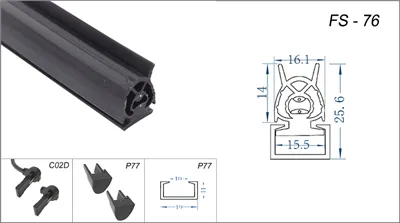
Determining if a rubber safety edge meets safety standards requires a comprehensive approach. As a supplier, I am committed to providing products that not only meet but exceed the highest safety standards. By focusing on material quality, conducting rigorous physical and chemical testing, obtaining proper certification, and understanding application – specific requirements, we ensure that our rubber safety edges provide reliable protection.
Rubber Safety Edge If you are in the market for high – quality rubber safety edges, I encourage you to reach out to discuss your specific needs. Whether you are in the industrial, building, or transportation sector, we have the expertise and products to meet your requirements. Let’s work together to create a safer environment.
References
- International Organization for Standardization (ISO) standards related to rubber products.
- American National Standards Institute (ANSI) standards for safety equipment in relevant industries.
- Underwriters Laboratories (UL) testing and certification guidelines for fire – retardant materials.
Ningbo Futai Safety Edge Technology Co., Ltd.
Ningbo Futai Safety Edge Technology Co., Ltd. is one of the most professional rubber safety edge manufacturers and suppliers in China, also supports customized service. Please feel free to buy advanced rubber safety edge in stock here from our factory. Contact us for free sample and discount information.
Address: No. 1116, Beihuan West Road, Jiangbei District, Ningbo City, Zhejiang Province
E-mail: info@safety-edge.com
WebSite: https://www.safety-edge.com/
