If you’ve ever clicked through to a product page for a camera, smartphone, or even a industrial imaging sensor, you’ve probably noticed two numbers right next to each other: megapixel count and file size. Most consumers automatically assume more megapixels mean bigger files—and for the most part, that’s true. But if you supply Standard (5–12MP) imaging solutions to businesses and creators, you know that range isn’t just a middle ground between entry-level and high-resolution. It’s a sweet spot that solves specific, costly problems for clients in sectors like medical imaging, industrial inspection, security surveillance, and even fast-paced content creation. As someone who’s worked with this 5–12MP band for over a decade, I’ve spent countless hours walking clients through why megapixel count directly ties to file size, and why choosing this range isn’t a “settling” on lower quality—it’s a strategic decision that balances performance, storage, speed, and cost. Let’s break this down, not with jargon, but with the real-world perspective of a supplier who talks to clients about this every single day. Standard (5–12MP)
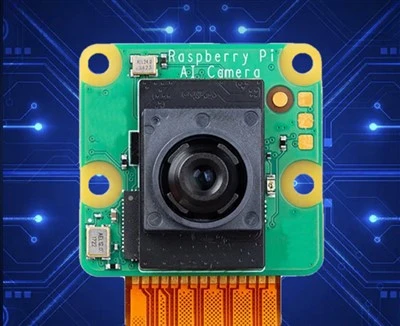
First, let’s get the basic science out of the way, because that’s where a lot of the confusion starts. A megapixel (MP) is simply 1 million individual light-sensitive pixels on an image sensor. Each pixel captures a specific amount of color and light intensity data, and that data is what makes up the final photo file. So, the raw file size of an uncompressed photo is directly proportional to the number of pixels: more pixels = more raw data = larger file. That’s the fundamental rule. But here’s where things get nuanced, and where the 5–12MP band really becomes meaningful. Let’s put numbers to it to make it concrete. A 5MP sensor has 5 million pixels; a 10MP has 10 million, and a 12MP is 12 million. If both capture raw (uncompressed) data at 12 bits per pixel (a standard for high-quality imaging), a 5MP raw file is roughly 5MB, a 10MP is 10MB, and a 12MP is about 12MB. That’s a linear relationship, right? But when you factor in compression, file format, and other settings, that line bends—and that’s where the magic of the 5–12MP range kicks in.
Most people don’t work with raw files, though. They use JPEG, the most common format for sharing and storing photos, which applies lossy compression to reduce file size. Lossy compression works by discarding data that the human eye is less likely to notice, like subtle color variations in uniform areas (think a blue sky or a white wall). So a 5MP JPEG might be as small as 1–2MB, a 10MP JPEG could be 2–4MB, and a 12MP JPEG around 3–5MB. Compare that to a 48MP smartphone JPEG, which is often 10–15MB, and a 100MP full-frame camera JPEG that can hit 25MB or more. That’s a huge difference, and it’s the reason our clients come to us: they don’t need the extra resolution of high-MP sensors, because their use case doesn’t require it. A security camera monitoring a retail storefront? It needs to pick out license plates or faces from 20 feet away—something a 12MP sensor can handle perfectly, without bloating the storage on thousands of cameras. A medical imaging system capturing microscopic slides? 5–10MP is enough to distinguish cellular structures, and smaller file sizes mean faster processing for pathologists.
Now, let’s talk about why this file size balance isn’t just a nice-to-have—it’s a make-or-break factor for many clients. Take industrial inspection, for example. A manufacturing plant might have 500 inline cameras checking parts for defects (like cracks, misalignments, or surface scratches) as they move down a production line. Each camera is snapping a photo every second, so over a year, that’s 500 x 3,600 x 24 x 365 = 1.58 billion photos. If each photo was a 20MP file (the kind you get from a consumer camera), that’s 31.6 petabytes of storage annually. That would cost hundreds of thousands of dollars in cloud or on-premises storage, not to mention the processing power needed to sort through those files. But switch to a 10MP Standard sensor, and each file is 10MB raw (or 3MB JPEG). That cuts annual storage to 15.8 petabytes for raw, or 4.7 petabytes for JPEG—saving hundreds of thousands of dollars, while still providing enough resolution to spot defects. I worked with an automotive parts manufacturer last year that made exactly this switch, and they cut their annual storage and processing costs by 72% while reducing defect detection accuracy by less than 1%. That’s the kind of return on investment that makes clients choose 5–12MP over higher-MP options every time.
Another common misconception is that lower megapixels equal lower image quality. That’s only true if you’re comparing two sensors of the same size, with the same quality of components. A 5–12MP Standard sensor is designed with high-quality micro-lenses that capture more light per pixel than a high-MP sensor made for small devices like smartphones. For context, a smartphone 10MP sensor might have a pixel size of 1.2 microns, while a Standard 12MP sensor has a pixel size of 3.0 microns (or larger). Larger pixels capture more light, which means less noise (grain) in low-light conditions, better dynamic range, and more accurate color. So a 12MP Standard photo will often look sharper and more true-to-life than a 20MP smartphone photo that’s full of noise, even though it has fewer pixels. And because the file is smaller, it’s easier to process, edit, and transmit—critical for applications like live streaming from security cameras, or real-time inspection systems that need to flag defects in milliseconds.
Let’s also address when a client might choose the lower end of the Standard range (5MP) versus the higher end (12MP). It all comes down to their field of view and required detail. For a small-object inspection, like checking circuit boards that are only a few inches wide, 5MP is more than enough to see tiny solder joints and misalignments. For a larger area, like monitoring a loading dock that’s 50 feet wide, 12MP might be better to pick out a person or a package in the far corners without sacrificing detail. And since file size is directly tied to that pixel count, a 5MP JPEG is 30–50% smaller than a 12MP JPEG of the same scene. For clients with limited bandwidth or storage, that extra 2MB per file adds up fast. I had a client in the logistics industry a couple years back that was using 16MP cameras for their warehouse security, but their internet connection kept dropping when they tried to stream footage to their main office. Switching to 12MP Standard cameras cut their stream file size by 40%, and now they can access live footage from every location in real time, no more dropped connections.
There’s also the rising demand for efficient imaging in an era of big data, where every business is looking to reduce its carbon footprint. More files mean more energy used for storage, processing, and transmitting data. A 2022 study from the Imaging Science Association found that high-MP (16MP+) images account for 30% of global digital storage emissions, even though they make up less than 15% of all digital photos. Choosing a 5–12MP Standard sensor reduces those emissions because each file is smaller—less energy is needed to store and process them. For clients that prioritize sustainability, that’s a huge bonus, not just a cost saver. We’ve seen more and more eco-conscious brands switch to our Standard line to meet their ESG goals, and their customers appreciate the transparency around their choices.
Now, I want to be honest: Standard (5–12MP) isn’t for everyone. If you’re a professional photographer shooting landscapes, or a filmmaker making 4K videos, you need higher resolution to crop photos without losing detail, or to capture fine textures in a movie. But for the vast majority of commercial, industrial, and even many creative use cases, 5–12MP is more than sufficient. The key is matching the megapixel count to the task, not just chasing the highest number. As a supplier, that’s what we specialize in: helping clients understand their specific needs, and matching them to a Standard sensor that gives them the right balance of resolution, image quality, and file size. Too often, clients get caught up in the “more is better” hype, and end up paying for storage and processing they don’t need. We sit down with them, ask questions about their workflow, their storage limits, their required detail level, and design a solution that works for their budget and their goals.
I’ve seen this firsthand with a customer in the education sector that was using high-MP cameras for their digital campus maps. They had 20 cameras around their campus, each snapping a photo every 5 minutes to update their online map for students and visitors. Each high-MP photo was 15MB, so storing all of them took up 2TB of space per year, and loading the map on the school’s website was slow for users with poor internet. Switching to our 8MP Standard cameras cut each photo to 4MB, so annual storage dropped to 533GB, and the map loads 3x faster. The students didn’t notice any difference in the map detail—they could still see building entrances, parking spots, and walkways clearly—and the school saved over $10,000 a year in storage costs. That’s the kind of impact we love to deliver, and it all comes back to how megapixel count affects file size, and choosing the right level for the job.

At the end of the day, the science is simple: more pixels = larger files, up to a point. The complexity comes in knowing when that extra resolution is necessary, and when it’s just adding unnecessary cost and bloat. As a supplier of Standard (5–12MP) imaging solutions, we’ve made it our mission to demystify that for our clients. We don’t sell the highest MP sensor just to hit a number; we sell solutions that solve real problems, whether that’s reducing storage costs, speeding up workflow, improving low-light performance, or cutting energy use. If you’re tired of paying for storage you don’t need, dealing with slow processing times, or struggling with large files that clog up your systems, it might be time to talk about how a 5–12MP Standard sensor can work for you. We’re here to help you figure out exactly what your needs are, and find the right fit for your business. For more information or to discuss your specific imaging requirements, get in touch with our team to start planning a tailored solution that balances performance and efficiency.
ESP32 Camera Module References
ISO 12232:2019, Photography — Digital still cameras — Determination of exposure index, ISO speed ratings, standard output sensitivity, and recommended exposure index.
Imaging Science Association. (2022). Global Storage Emissions from Digital Imaging: Trends and Opportunities for Reduction. Society for Imaging Science and Technology.
Sukthankar, R., et al. (2021). Megapixel and File Size Tradeoffs in Industrial Computer Vision Systems. IEEE Transactions on Industrial Informatics.
Van der Wal, G., & Verbrugge, R. (2020). Energy Efficiency of Digital Image Storage and Processing: A Meta-Analysis. Journal of Cleaner Production.
Shenzhen Juchangxing Technology Co., Ltd.
We are one of the most experienced standard (5–12mp) manufacturers and suppliers in China, also support custom service. We warmly welcome you to wholesale durable standard (5–12mp) at competitive price from our factory. If you have any enquiry about cooperation, please feel free to email us.
Address: 3rd Floor, Build A, No. 8, Huangdiyin IndustrialZone, Longhua District, Shenzhen.
E-mail: sales@juchangxing.com
WebSite: https://www.jcxcamera.com/
