Hey folks, if you’ve ever worked with jumbo rolls for tissue, paper, or even certain packaging materials, you know they’re basically big, heavy monsters that can turn a regular workday into a minor (or major) headache fast. I’ve been in the business of supplying jumbo rolls for over 10 years now, and let me tell you—nothing’s worse than watching a team panic because a 3,000-pound roll’s sitting in the wrong spot, or worse, almost takes out a pallet jack. Today I’m spilling the real, no-BS tips I’ve learned from years on the floor (and from fixing the mistakes that almost got someone hurt) on how to handle these heavy bad boys the right way. Jumbo Roll
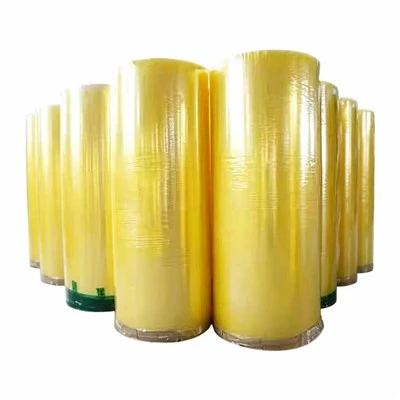
First off, let’s get one thing straight: these rolls aren’t like the small toilet paper rolls you grab from the store. A standard jumbo roll for tissue, for example, is usually 7 feet wide, 8 feet in diameter, and can weigh anywhere from 1,500 to 5,000 pounds. Yeah, that’s like moving a small car. So cutting corners here isn’t just bad for your rolls—it’s a safety hazard, plain and simple. I’ve seen new guys try to brute force one with a pallet jack they’re only sorta trained on, and it ended up scratching the roll so bad it got rejected by the customer (and almost crushed their foot). Don’t be that person.
Let’s start with the prep work, because 90% of handling issues happen before you even touch the roll. First, you gotta make sure your equipment’s up to snuff. I don’t care if your boss swears that old pallet jack “still works”—if the forks are bent or the wheels wiggle when you turn, that’s a no-go. For jumbo rolls, we almost exclusively use heavy-duty pallet jacks rated for at least 6,000 pounds (we go higher just to be safe) because you never know if a roll’s gonna be a little heavier than the spec says. Also, check the forks: they need to be long enough to go all the way under the roll’s core, not just partway. If they only go halfway, the roll’ll tip forward mid-lift, and trust me, that’s not a pretty sight.
Oh, and don’t skip the PPE (personal protective equipment). I know, I know—everyone’s rolled their eyes at goggles and steel-toe boots, but when a 2-ton roll shifts, you don’t want a flying roll core hitting your shin. Steel-toe boots are non-negotiable, closed-toe shoes only. Gloves are a good idea too—rubber ones with grip, not the thin cotton kind that tear the second you touch the roll’s rough paper surface. And if you’re working around a roll that’s not secured, a hard hat just makes sense. I once saw a guy who skipped a hard hat and got knocked out by a loose roll that shifted during a rainstorm—he’s lucky it wasn’t worse.
Next up, moving the roll. This part’s where most people mess up, especially when they’re in a hurry. First, position the pallet jack correctly. You want to line the forks up dead center under the roll’s hollow core. Not off to one side, not angled funny—dead center. If you’re off, the roll’ll be unbalanced, and it’ll lean to one side, putting too much weight on one fork. That’s how forks bend or break, and that’s how rolls crash. Take 10 extra seconds to line it up right—it’s worth it.
Once the forks are in, don’t just yank the lever all the way up. Lift the roll slow, just a few inches off the ground at first, and then stop. Give it a little shake—if it’s wobbling, it’s not sitting right. Lower it back down, adjust the forks, and try again. It’s better to take an extra minute than to have the roll slip off the forks mid-move. When you’re finally ready to move, go slow. No speeding through the warehouse, no slamming into pallets or walls. Jumbo rolls are round, so they can roll if they tip, and when they roll, they don’t stop for anything. I’ve had a roll roll down a loading ramp once because the driver was in a hurry and didn’t secure it, and it took out three empty pallets before someone finally stopped it. Don’t make that mistake.
Storing the roll is another big one that people ignore. You can’t just leave a jumbo roll sitting on the floor anywhere—it needs a specific spot. First, the ground has to be flat and level. If the floor’s sloped even a little, the roll’ll roll over, especially if it’s not on a pallet. Always store jumbo rolls on heavy-duty pallets, not the thin ones you use for small boxes. And never stack more than two rolls high. Wait, hold on—some people will try to stack three if they’re short on space, but that’s a huge risk. The bottom pallet can’t handle the weight of three 3,000-pound rolls, and the top one’ll come crashing down. We had a customer last year who stacked three rolls high and the middle one collapsed, taking out a forklift and a whole section of their warehouse. Needless to say, they didn’t order from us for a while.
Also, keep stored rolls away from doors, loading docks, and high-traffic areas. If someone’s running a pallet jack through that spot, they could bump the roll and make it roll. We mark our storage spots for customers with big yellow tape so they know exactly where to put them—no guessing, no messy aisles. And if you’re storing rolls for more than a day or two, cover them with a plastic tarp to keep dust and moisture out. Wet paper is weak, and dust will scratch the surface, both of which make the roll unusable once it’s on the machine.
Now, what if you have to actually rotate the roll on-site? A lot of our customers have to do this when they’re loading it into their converting machine, and they come to us all stressed because they don’t wanna damage the roll or hurt themselves. First, never try to roll a jumbo roll by pushing it with your hands. I know it looks like it’d be easy, but a roll that’s 5 feet in diameter is like a giant wheel—if it picks up speed, you can’t stop it, and it’ll crush you between it and a wall. Instead, use a roll cradle or a rotating arm designed specifically for jumbo rolls. These are cheap investments that save you from a world of trouble. If you don’t have a cradle, use two thick wooden blocks to prop the roll up so it’s off the ground, and then use a long, sturdy pipe or crowbar to rotate it gently by pushing on the core, not the paper surface. Never push on the outer paper—you’ll tear it, and that’s a defect.
Wait, let’s talk about common mistakes I see all the time. One: using a regular pallet jack for jumbo rolls. Those light-duty ones that you use for small boxes can only handle 2,000 pounds max—you’ll bend the forks and damage the jack, plus you risk dropping the roll. Another one: not securing the roll during transport. If you’re moving a roll with a forklift, use straps to tie it down to the pallet. Even a slow bump can make the roll shift, and if it falls off the forks, it’ll break or scratch badly. And my pet peeve: not communicating. If you’re moving a jumbo roll, yell “roll moving!” as you go. Give everyone in the area a heads up so they can get out of the way. No one wants to turn a corner and see a 3,000-pound round thing coming at them.
Also, maintenance for the rolls themselves—wait, no, handling is what we’re on, but wait, part of handling is inspecting the roll before you move it. When we deliver rolls to our customers, we always do a quick check to make sure the core is intact, the paper isn’t damaged, and the weight is on spec. But our customers should do the same when they unload. If the core is cracked, or if the roll looks lopsided, don’t move it—call us and we’ll swap it. Moving a damaged roll is just asking for it to fall apart mid-use.
Let’s break this down into a quick, actionable list for you, no fluff: 1. Prep: Check your equipment (heavy-duty pallet jack, good forks), wear PPE (steel-toe boots, hard hat, gloves). 2. Lift: Line forks dead center under the core, lift slow, test for wobble. 3. Move: Go slow, no rushing, communicate loudly. 4. Store: Flat level ground, heavy pallets, max two rolls high, away from traffic, covered for long storage. 5. Rotate: Use proper tools, never push with hands, push only the core.
I know, it sounds like a lot, but trust me—once you get into this routine, it becomes second nature. And the best part? You’ll avoid the headaches, the damaged rolls that cost you money, and the injuries that no one wants to deal with. We’ve had customers who used to rush through handling and had tons of rejected rolls, and after following these tips, their defect rate dropped by 80% in just a month. That’s not a small win.
At the end of the day, jumbo rolls are heavy, but they’re manageable if you take the time to do it right. I’ve been doing this long enough to know that cutting corners here doesn’t save you time or money—it costs you. If you’re a business that uses jumbo rolls, whether it’s tissue, paper, packaging, whatever, and you’re tired of dealing with damaged rolls, safety scares, or messes on the floor, reach out to our team. We don’t just sell you rolls—we give you the tips and support to handle them the right way, no weird fine print, no hidden fees. We want you to have a smooth experience, just like we do when we deliver our rolls.
So don’t wait until you have a roll that’s almost rolling through your warehouse to make a change. Follow these steps, play it safe, and you’ll be golden. And if you have any questions, or you’re ready to stock up on quality jumbo rolls that are easy to handle (when you do it right), hit us up for a chat—we’re here to help.
PP Non-woven Fabric References:
- Occupational Safety and Health Administration (OSHA). Warehouse Safety Guidelines for Heavy Material Handling.
- Paper and Packaging Board. Best Practices for Handling Jumbo Rolls in Converting Facilities.
- National Safety Council. Safe Lifting and Moving of Heavy Cylindrical Loads.
- International Paper. Jumbo Roll Storage and Handling Manual.
Zhejiang Guowang Packaging Co., Ltd.
Zhejiang Guowang Packaging Co., Ltd. is one of the most professional jumbo roll manufacturers and suppliers in China, featured by quality products and low price. Please rest assured to buy customized jumbo roll made in China here from our factory. Also, pricelist is available.
Address: Youbu Town, Lanxi City, Zhejiang Province, China
E-mail: Nicole@guowangtape.com
WebSite: https://www.guowangtape.com/
